
Gaza War (2008–2009)
- When
- 27 December 2008 to 18 January 2009
- Where
- Gaza Strip
- Sides
- Israel vs Hamas
- Drones
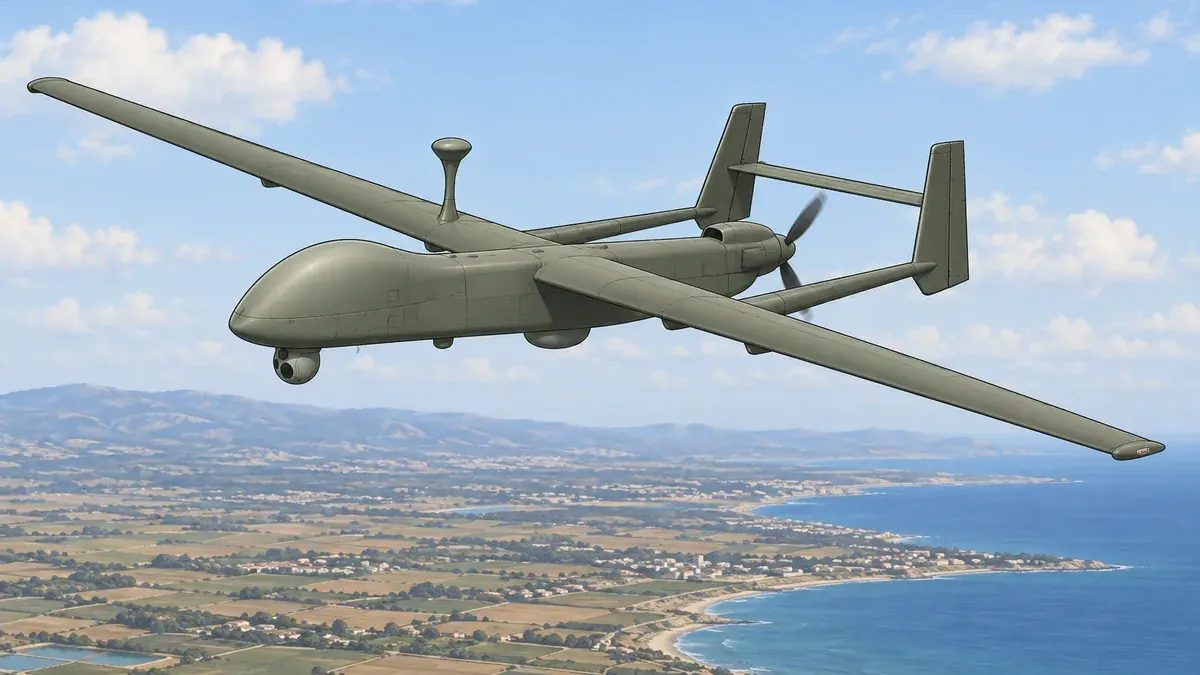
- IAI Heron
From 27 December 2008 to 18 January 2009, Israel fought Hamas and other Palestinian paramilitary groups in the Gaza Strip in a conflict Wikipedia calls the Gaza War, also known as Operation Cast Lead. Israeli drones watched the ground continuously and fired missiles, and Human Rights Watch investigated six drone strikes that killed 29 civilians, eight of them children. Wikipedia names the sides as the Israel Defense Forces (IDF) and Hamas.
What happened
Wikipedia records that Israel opened the campaign at 11:30 am on 27 December with F 16 fighter jets and AH 64 Apache helicopters striking 100 targets in 220 seconds. A ground invasion followed on the evening of 3 January 2009, and Israel had carried out 2,360 air strikes by 15 January. Wikipedia lists 13 Israelis killed, and Palestinian deaths of 1,417 per the Palestinian Centre for Human Rights, 1,391 per B'Tselem and 1,166 per the IDF. Later fighting in Gaza included the 2012 Gaza War, the 2014 Gaza War and the Gaza war that began in 2023.
The drones
Human Rights Watch wrote in "Precisely Wrong" that Israel's primary armed drones are the Hermes, made by Elbit Systems, and the Heron, made by Israel Aerospace Industries. It gave the Hermes an endurance of up to 24 hours at up to 18,000 feet, carrying two Spike MR missiles from Rafael. It gave the Heron up to 40 hours at 30,000 feet, carrying four Spike missiles. Human Rights Watch said Israel used both types armed with the Spike in Gaza, and that both record everything the operator sees. It found cube shaped tungsten fragments, 3 mm across, spreading over about 20 metres, at each of the six sites.
How they were used
Human Rights Watch researchers watched IDF drones over northern Gaza on 9, 10 and 15 January 2009. Wikipedia records that an Israeli UAV strike on the Gaza City police headquarters on 27 December killed 40 people, including dozens of police cadets at a graduation ceremony. Al Jazeera's Jonathan Cook reported that the practice of roof knocking, in which a drone fires small missiles at a roof to warn residents to leave, was developed during Cast Lead.
What effect they had
Human Rights Watch documented that on 27 December a missile hit students waiting for a bus in central Gaza City, killing 12 civilians. On 29 December a missile struck a truck east of Jabalya, killing nine civilians; the IDF said the men were loading Grad rockets, later admitted the cylinders were oxygen tanks, and said four of the eight men killed were Hamas operatives. On 5 January a missile hit the UN run Asma school, killing three young men of the Sultan family. Three more strikes hit children playing on roofs, killing six. Human Rights Watch concluded that these attacks violated the laws of war. B'Tselem, the Palestinian Centre for Human Rights and Al Mezan together reported 42 drone attacks that killed 87 civilians, and Amnesty International said it documented 48 civilian deaths. The IDF did not answer Human Rights Watch's written questions of 12 March 2009 as of 3 June.
For the classroom
- Why did Human Rights Watch argue that drone cameras and long loiter time made the six strikes harder to excuse?
- What could a drone operator see of men loading cylinders onto a truck, and what could the operator miss?
- How did roof knocking use drones to warn residents before a strike?
Sources
- Wikipedia: Gaza War (2008–2009)
- Precisely Wrong (Human Rights Watch, 2009)
- Israel: Misuse of Drones Killed Civilians in Gaza (Human Rights Watch, 2009)
- Gaza: Life and death under Israel's drones (Al Jazeera, 2013)
Written 2026-10-04.