
July 2024 Houthi–Israel attacks
- When
- 19 to 20 July 2024
- Where
- Tel Aviv and Hodeidah
- Sides
- Houthis vs Israel
- Drones
- Samad-3
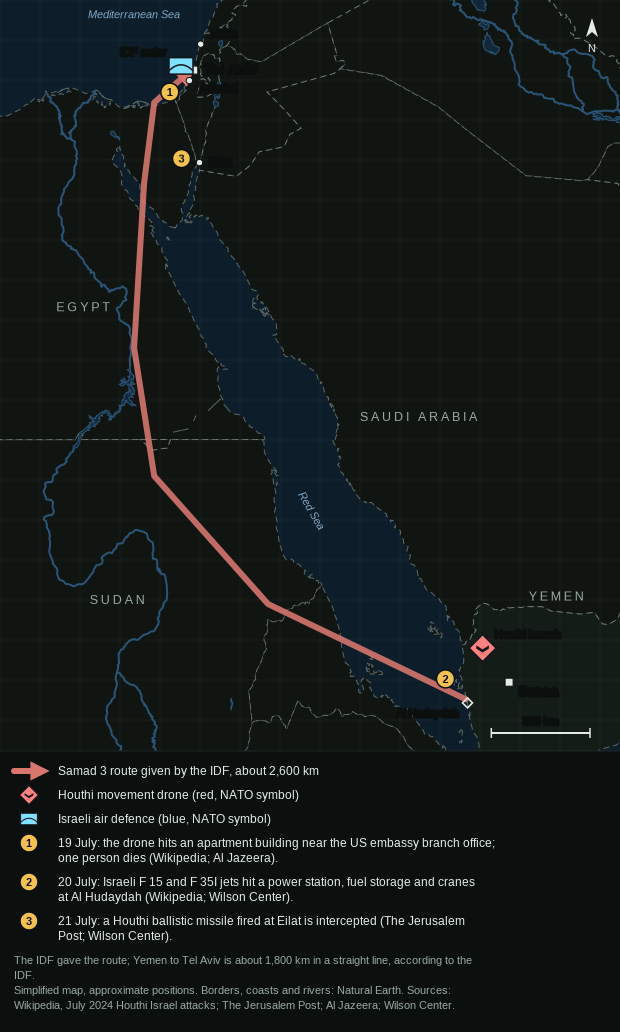
On 19 July 2024 a drone launched by the Houthi movement in Yemen hit an apartment building in Tel Aviv and killed one person, and on 20 July the Israel Defense Forces struck the port of Al Hudaydah in Yemen. Wikipedia names the sides as the Houthi movement and Israel. The Israel Defense Forces said the drone was an Iranian made Samad 3 modified to fly farther, while the Houthis called it a new type named Yafa.
What happened
Wikipedia records that the drone struck in the early hours of 19 July on Ben Yehuda Street, near the branch office of the United States embassy, and lists one dead and ten injured. Al Jazeera named the dead man as Yevgeny Ferder, aged 50, and put the injured at eight in its first report. Israeli authorities said no siren sounded. The strike came during the Red Sea crisis, after nine months of mostly intercepted Houthi launches. The next day Israeli jets attacked Al Hudaydah, which Wikipedia calls the first time Israel directly attacked Yemen.
The drones
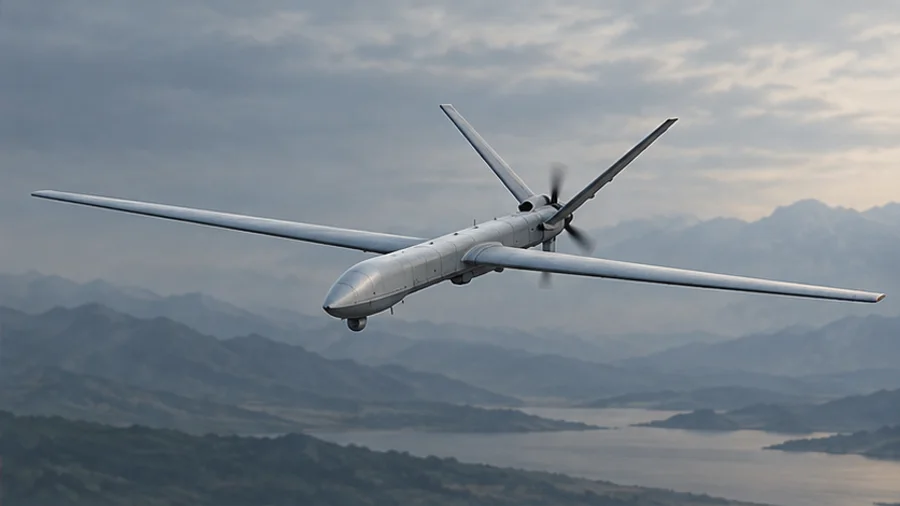
The IDF said the aircraft was a Samad 3, made in Iran and modified by the Houthis to carry more fuel in exchange for a smaller warhead, according to Wikipedia. The Jerusalem Post reported that the IDF said the standard engine had been replaced, that longer wings and carbon fibre had been added, and that the drone flew at 80 to 100 kilometres per hour. Houthi spokesman Yahya Saree said the drone could fly undetected through Israeli air defences. Wikipedia notes that Fabian Hinz of the International Institute for Strategic Studies challenged that claim, and the IDF said its radar did detect the aircraft.
How they were used
The Jerusalem Post reported the IDF account of the route: west from Yemen toward Sudan, north through Sudan to southern Egypt, on to Sinai, then east over the Mediterranean and in toward Tel Aviv from the sea. The IDF put the distance at 2,600 kilometres over about 16 hours, against a direct distance of 1,800 kilometres. A radar operator saw a blip far out over the Mediterranean and either missed it or dismissed it, and the system recognised a threat only when the drone was five minutes away. A second drone from the east appeared on the same screen, and the IDF intercepted it.
What effect they had
Nick Brumfield, an independent Yemen analyst, told Al Jazeera it was the first publicly confirmed Houthi strike in the Mediterranean. The Associated Press, cited by Wikipedia, called it the first Houthi strike on Israel to reach its target. Defence Minister Yoav Gallant promised a response. On 20 July Israeli F 15 and F 35I jets, refuelled by Boeing 707 aircraft, hit a power station, fuel storage and cranes at Al Hudaydah, about 1,700 kilometres from Israel, in what the IDF called Operation Outstretched Arm. Yemen's health ministry reported six dead, according to the Wilson Center; Wikipedia lists 14 dead, 12 of them employees of the Yemen Petroleum Corporation, and more than 90 injured, citing Sky News Arabia. The port ran fully again by 28 July. The Wilson Center lists Houthi launches during the April 2024 Iranian strikes against Israel.
For the classroom
- Why did the Samad 3 fly 2,600 kilometres to cover a direct distance of 1,800 kilometres?
- The IDF and the Houthis gave different reasons why the drone was not intercepted. What does the IDF account say about the radar and the operator?
- How did the second drone from the east change what the radar operator saw?
Sources
- Wikipedia: July 2024 Houthi Israel attacks
- Houthi drone strikes Tel Aviv: How significant is the attack? (Al Jazeera, 2024)
- The Jerusalem Post: IDF Reveals Houthi Drone’s Journey to Tel Aviv, exploiting radar flaw
- Houthis and Israel (Wilson Center)
Written 2026-10-04.