
October 7 attacks
- When
- 7 October 2023
- Where
- Gaza border and southern Israel
- Sides
- Hamas vs Israel
On 7 October 2023, Hamas led armed incursions from the Gaza Strip into southern Israel, and small commercial drones carrying explosives were among its first weapons, used against border observation towers, communications equipment and tanks. Wikipedia names the sides as Hamas and Israel. The Institute for National Security Studies (INSS) in Tel Aviv wrote on 26 October 2023 that the drones were small, cheap and technologically simple, yet caused major damage.
What happened
Wikipedia records that the attacks began with a barrage of at least 4,300 rockets, followed by vehicle and powered paraglider incursions. According to an Israel Defense Forces report cited by Wikipedia, 6,000 Gazans breached the border in 119 locations. They attacked military bases and 21 communities, among them Be'eri and Kfar Aza. Wikipedia states that at least 1,195 people were killed, at least 828 of them civilians, including 36 children, and 367 members of the security forces. Israel's response began the Gaza war.
The drones
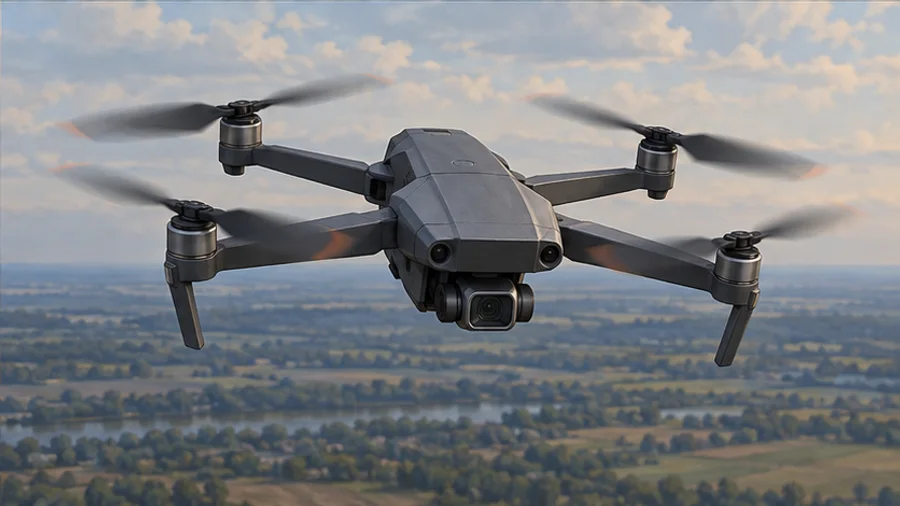
The INSS authors, Liran Antebi and Matan Yanko Avikasis, described small rotary drones fitted with improvised explosive devices, based on off the shelf technology. A video they cite showed a DJI quadcopter, converted to carry a weapon, hitting an Israeli Merkava Mark 4 tank. A study by Gloria Shkurti Ozdemir for the Arab Center for Research and Policy Studies in Doha, published on 21 November 2024, says the commercial drones are thought to be DJI quadcopters. It adds that Hamas also flew a fixed wing drone called Zouari, which it produces, as a one way loitering munition alongside rockets. INSS put the cost of a DJI with explosives at a few hundred dollars, against about 20 million dollars for a Predator. The DJI is a commercial quadcopter sold for photography.
How they were used
The New York Times reported that Israeli officials had obtained attack plans more than a year earlier, with drones assigned to knock out surveillance cameras and automated guns along the border. INSS said the al Kassem Brigades published pictures on 7 October of small drones with improvised explosives on generators at the base of communications towers near the border and on IDF observation posts. Amir Bohbot wrote in the Jerusalem Post that around 6:30 a.m., as hundreds of rockets were fired, dozens of drones dropped small explosives on observation towers and shooter positions, and that drones also hit tanks and armoured personnel carriers near the border. Defence Blog reported that Hamas later released footage of a drone dropping an RPG 7 tandem grenade on a Merkava, which it corrected from a Mark 4 to a Mark 3.
What effect they had
INSS stated that the loss of communications created critical blind spots for troops and prevented units from coordinating fighting and search and rescue. Bohbot reported that the strikes on towers and armour let squads run from Gaza to the fence, attach explosives and blow holes through which hundreds of fighters entered on motorcycles. INSS noted that the light weight, low flight path and low speed of these drones let them evade most existing radar. From 8 October Hezbollah also sent drones into northern Israel, in the Israel Hezbollah conflict.
For the classroom
- Why did cameras, generators and communications towers make useful first targets for small drones?
- Why does a drone costing a few hundred dollars change the balance against a 20 million dollar aircraft?
- How could the IDF have defended unprotected towers against drones that radar struggles to see?
Sources
- Wikipedia: October 7 attacks
- Life and Death in the Hands of the Drone (INSS, 2023)
- What can be learned from Hamas and Hezbollah's use of drones in this war (Jerusalem Post, 2024)
- Remote Warfare: Evaluating the Combat Effectiveness of Drones in the Context of the War on Gaza (Arab Center for Research and Policy Studies, 2024)
- Hamas drone strikes Israeli Merkava tank (Defence Blog, 2023)
Written 2026-10-04.