
Huliaipole: Across the Haichur
Huliaipole and the Haichur valley, Zaporizhzhia Oblast, Ukraine · 1 December 2025 to 20 January 2026
Information as of October 2026
Battle index: Huliaipole offensive
Learning objectives
- Locate Huliaipole and the Haichur valley.
- Follow the December and January phases.
- Compare a limited delay goal with the historical result.
Run time and a good result
Default run clock: 6 minutes 0 seconds at 1×, excluding pauses, briefing and discussion. Time controls change elapsed play time.
Objective: Delay capture of the marked main town area until the episode ends. Ukraine did not retain Huliaipole historically; this is a limited delay mission.
Huliaipole: Across the Haichur: Delay capture of the marked main town area until the episode ends. Ukraine did not retain Huliaipole historically; this is a limited delay mission. Prevent an unopposed enemy occupation of the marked zone lasting 8 continuous simulation seconds; retain a fighting force until the episode ends. The authored limit is 360 simulation seconds across 3 stages. Compare objective progress, time, losses, drone expenditure and recorded civilian harm with a second run. A strong classroom result also explains the source evidence and reconstruction estimates; it does not verify a historical casualty count.
Timings
For 60 minutes, brief for 15, run with pauses for 25 and discuss for 20. For 90 minutes, compare both sides. For 180 minutes, compare the wider campaign.
| Session | Plan |
|---|---|
| 45 minutes | Brief: 10 min; Run: 15 min; Collect: 5 min; Review: 15 min |
| 60 minutes | Before questions: 5 min; Brief: 10 min; Run: 20 min; Collect: 5 min; Debrief and after questions: 15 min; Discussion: 5 min |
| 90 minutes | Before questions: 5 min; Brief: 10 min; Run 1: with drones: 20 min; Run 2: without drones: 15 min; Collect: 5 min; Compare and discuss: 25 min; After questions: 10 min |
| 180 minutes | Before questions: 10 min; Brief and staff roles: 15 min; Run 1: with drones: 25 min; Run 2: without drones: 20 min; Break: 10 min; Run 3: syndicates: 30 min; Collect: 10 min; Seminar replay and debrief: 40 min; After questions: 10 min; Close: 10 min |
Staff roles
- commander
- Track capture and delay goals.
- intelligence
- Compare dated accounts and claims.
- fires
- Record simulated effects and civilian exposure.
- droneOps
- Compare observation and attack roles.
Opposing staff objective
Capture the marked main town area. OSW reported Russian control of the Huliaipole area on 20 January.
Decision points
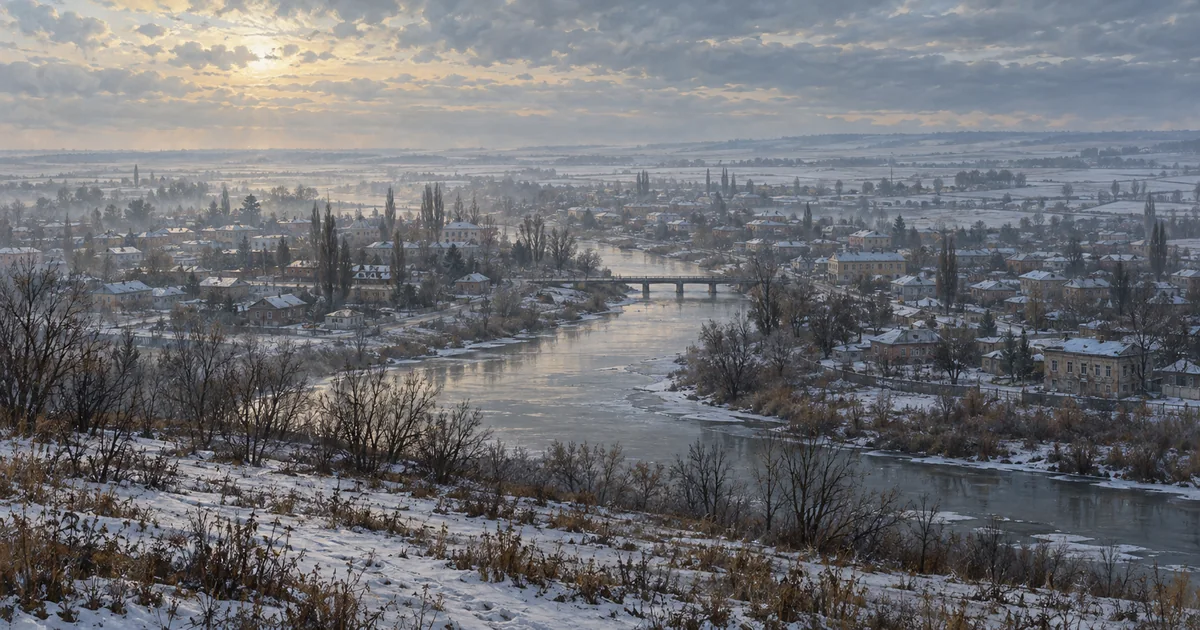
- Opening: how does the town sit across the river?
- Middle phase: what do the competing control claims describe?
- Final phase: what does the delay goal preserve?
Before and after questions
What changed between OSW's 5 and 20 January 2026 Huliaipole assessments?
- Both reports assessed full control, with only the fighting intensity changing.
- The first assessed Russian control; the second assessed Ukraine's return.
- Both reports assessed contested control, with only the river position changing.
- The first denied full control; the second assessed Russian area control.
Answer D: OSW's 5 January account says Russia lacked full control; its 20 January account assesses control of the entire Huliaipole area. Keep both dates and the attribution.
Why did OSW's 5 January report not equate a river bridgehead with full town control?
- The same OSW assessment also described Ukrainian counterattacks reaching the centre while denying full Russian control
- It treated movement west of the river as proof of every district's capture.
- It treated all reported counterattacks as events before the town battle.
- It described Russian bridgeheads only in farmland far outside the town.
Answer A: The same OSW paragraph reports western-bank bridgeheads, denies full town control and describes a Ukrainian counterattack reaching the centre.
What does fog in the Huliaipole simulation establish about winter visibility?
- It verifies the visibility measured during each historical counterattack.
- It supplies a winter assumption, not a verified daily weather record.
- It reproduces a documented loss of observation throughout the whole battle.
- It identifies the exact dates on which drone flights stopped over the town.
Answer B: The simulation sets weather to fog; its accuracy note says fog represents winter conditions. Neither field supplies a daily historical visibility series.
What can Reuters' 12 November 2025 Huliaipole evacuation report support?
- A final count of civilian deaths during the December–January town battle.
- A final count of injured residents during the January loss of the town.
- An account of residents leaving before the selected battle episode began.
- An account of all civilian movements after the town changed hands in January.
Answer C: The Reuters report is dated 12 November, before the 1 December opening. Its evacuation testimony must not become a December–January casualty total.
How should a successful Ukrainian hold in this Huliaipole run be described?
- As evidence that OSW's later control assessment concerned another town.
- As verification that the historical town remained Ukrainian in January.
- As confirmation that simulated equipment losses measure civilian harm.
- As a model delay result, compared with OSW's dated Russian-control finding.
Answer D: The simulation's hold objective is a limited delay mission. OSW assessed Russian area control on 20 January; simulated equipment losses remain separate from civilian harm.
Discussion
- Why can forces from both sides be present in the same town?
- What can drone observation establish about control?
- What did evacuation mean for residents?
Debrief rubric
- Strong
- Meets the objective or explains why it was not met; uses the published sources and run evidence, separates known facts from assumptions, compares both sides’ losses and cost exchange, and evaluates precautions against civilian harm.
- Adequate
- Describes the objective and main decisions, identifies at least one source and model limitation, reports losses and harm, and gives a reasoned change for a second run.
- Weak
- Reports only victory or points, treats teaching settings as real performance, gives unsupported historical claims, or omits uncertainty and civilian harm.
Facilitator notes
Assess historical source analysis through the cited readings, answers and discussion. Run metrics describe the simulated run; they do not verify historical claims or demonstrate that a source-analysis objective has been met.
Published readings
- OSW: Devastating Russian attacks on the capital energy infrastructure, 20 January 2026
- OSW: New Year slowdown on the front, 5 January 2026
- The Guardian, Dan Sabbagh: East of Zaporizhzhia Ukraine drone crews face endless battle to hold the line, 17 December 2025
Complete source list
- Wikipedia: Huliaipole offensive, accessed 5 October 2026
- OSW: Devastating Russian attacks on the capital energy infrastructure, 20 January 2026
- OSW: New Year slowdown on the front, 5 January 2026
- The Guardian, Dan Sabbagh: East of Zaporizhzhia Ukraine drone crews face endless battle to hold the line, 17 December 2025
- Reuters, Sergiy Chalyi: Ukrainians flee southeastern front as fighting worsens, 12 November 2025
- Reuters: Putin says Russia will achieve its Ukraine aims by force, 27 December 2025, updated 28 December
- Ukrainska Pravda, Valentyna Romanenko and Olha Kyrylenko: Investigation of command post video, 25 December 2025
- Ukrainska Pravda, Kateryna Tyshchenko: Situation in Huliaipole difficult but Russia does not have full control, 28 December 2025
- Ukrainska Pravda, Valentyna Romanenko: DeepState on situation in Huliaipole, 29 December 2025